
Table of Contents
- Why Flexible Office Seating Is the Smarter Investment
- Flexible Office Seating Supports Every Employee
- Ergonomic Adjustability Beats Luxury Materials
- Employee Comfort and Productivity
- Why Modern Offices Need Flexible Seating
- Long-Term Business Value
- How to Choose Flexible Office Seating
- Final Thoughts
- FAQs
Flexible Office Seating Is the Smarter Investment
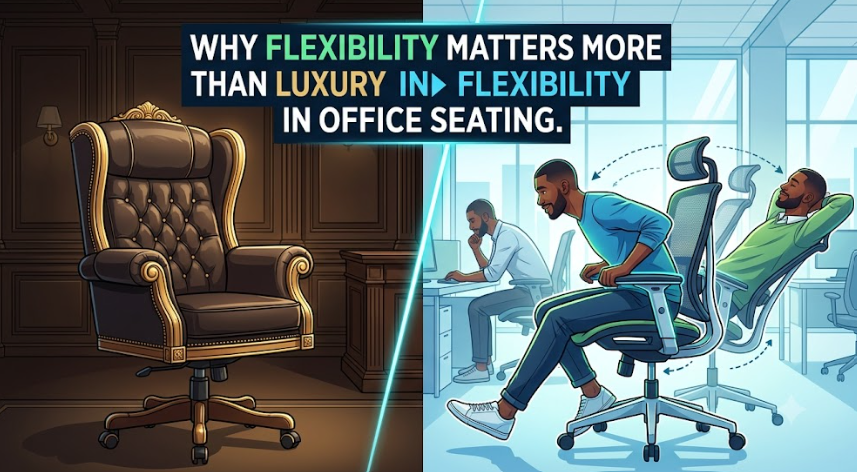
Flexible Office Seating has become one of the smartest investments businesses can make. For years, organisations believed that expensive executive chairs, premium leather finishes, and luxury office interiors automatically created better workplaces. While premium materials certainly improve aesthetics, today’s workforce values something much more practical—comfort that adapts to different people, different working styles, and different ways of collaborating.
Modern offices have changed dramatically over the past decade. Hybrid work, shared workstations, collaborative spaces, and flexible schedules have transformed the expectations employees have from their workplace. A chair is no longer simply a place to sit. It has become an important tool that supports health, focus, movement, and productivity throughout the working day.
This is why Flexible Office Seating is replacing the traditional idea of luxury office furniture. Employees rarely remember whether a chair was made from premium leather or polished aluminium. What they remember is whether they remained comfortable after six hours of focused work or whether they spent the day adjusting their posture because the chair didn’t fit their body.
Businesses that prioritise adaptability over appearance are discovering measurable benefits. Comfortable employees remain focused longer, collaborate more effectively, and experience less physical fatigue during demanding workdays. These improvements contribute directly to better employee satisfaction and stronger business performance.
Key Insight
The best office chair isn’t always the most expensive one. It’s the one that comfortably supports different employees, different tasks, and different working styles every day.
Today’s organisations also recognise that every employee has unique ergonomic requirements. Height, posture, working habits, and job responsibilities vary significantly across teams. A chair designed for one individual may be uncomfortable for another. That’s why businesses are increasingly investing in ergonomic office furniture that offers multiple adjustment options rather than relying solely on premium materials.
An adjustable chair allows employees to customise seat height, lumbar support, armrests, recline tension, and headrest positioning according to their personal needs. This level of flexibility improves comfort while supporting healthier posture throughout the day.
According to the OSHA Computer Workstations Guide , proper workstation ergonomics play an important role in reducing physical strain during prolonged desk work. Comfortable seating is therefore not simply about convenience—it’s about creating healthier workplaces.
Throughout this guide, we’ll explore why Flexible Office Seating consistently delivers better long-term value than luxury-focused office furniture and how businesses can create workplaces that truly support their employees.
1. Flexible Office Seating Supports Every Employee
No two employees work exactly the same way. Some spend most of their day attending meetings, while others focus on design, coding, customer support, finance, or project management. Each role places different physical demands on the body, which means a one-size-fits-all approach rarely provides lasting comfort.
This is where Flexible Office Seating becomes essential. Instead of forcing employees to adapt to a fixed chair, adjustable seating adapts to the employee. Features such as adjustable lumbar support, seat depth, tilt mechanisms, headrests, and armrests allow every individual to create a workspace that feels comfortable throughout the day.
The result is more than improved posture. Employees experience fewer distractions, remain focused for longer periods, and spend less time adjusting their seating position. These seemingly small improvements contribute to greater efficiency and higher workplace satisfaction.
Businesses that invest in adaptable office furniture are also better prepared for modern workplace trends. Hybrid work, hot-desking, collaborative workspaces, and flexible seating arrangements all require furniture that can be adjusted quickly for different users.
Benefits of Flexible Office Seating
- Supports employees of different heights and body types.
- Encourages healthier posture throughout the day.
- Improves employee comfort during long working hours.
- Reduces unnecessary physical fatigue.
- Supports workplace productivity.
- Perfect for hybrid offices and shared workstations.
Businesses looking to build future-ready workplaces often choose adaptable seating instead of fixed executive chairs. Modern office furniture solutions provide employees with greater flexibility while allowing organisations to maximise the value of every workstation.
Ultimately, the goal isn’t simply to purchase expensive furniture. It’s to create a workplace where employees can comfortably perform at their best every single day. That’s exactly what Flexible Office Seating is designed to achieve.
2. Ergonomic Adjustability Matters More Than Premium Materials
When businesses compare office chairs, it’s easy to be influenced by premium upholstery, polished aluminium frames, or executive-style aesthetics. While these features certainly enhance appearance, they don’t necessarily improve the everyday working experience. In reality, Flexible Office Seating delivers far greater value because it prioritises adjustability over appearance.
A chair covered in premium leather may look impressive in a boardroom, but if it lacks proper lumbar support or adjustable armrests, employees are likely to experience discomfort after just a few hours. On the other hand, an ergonomic chair with multiple adjustment options can comfortably support employees throughout an entire workday regardless of their height, posture, or working style.
This is why organisations are increasingly investing in ergonomic office furniture rather than focusing only on luxury finishes. The ability to personalise a chair for each employee creates a healthier and more productive workplace, especially in offices where multiple people use the same workstation.
Essential Features of Flexible Office Seating
- Adjustable seat height for proper posture.
- Lumbar support that adapts to the lower back.
- Height-adjustable armrests to reduce shoulder strain.
- Seat depth adjustment for different body types.
- Smooth recline and tilt-lock mechanism.
- Comfortable headrest for neck support.
- Breathable materials suitable for long working hours.
The true strength of Flexible Office Seating lies in its ability to adapt. Employees can fine-tune the chair to match their body instead of forcing themselves into an uncomfortable sitting position. These small adjustments significantly reduce fatigue while helping maintain healthy posture during long periods of desk work.
The Mayo Clinic’s Office Ergonomics Guide explains that proper seating position and workstation adjustments can reduce stress on muscles and joints while improving overall comfort during prolonged computer use.
Instead of asking whether a chair looks luxurious, businesses should ask a more important question: Can every employee sit comfortably in it for eight hours? If the answer is yes, that chair is far more valuable than one designed purely for appearance.
3. Employee Comfort Is the Real Measure of Quality
The quality of an office chair shouldn’t be judged by its price tag alone. The real benchmark is how effectively it supports employees throughout their working day. This is where Flexible Office Seating consistently outperforms traditional executive seating.
Employees spend thousands of hours each year sitting at their desks. During that time, even small improvements in comfort can make a noticeable difference. Better support reduces physical strain, encourages natural posture, and allows employees to remain focused on their work instead of constantly adjusting their seating position.
An uncomfortable chair creates ongoing distractions. Employees frequently shift positions, lean forward, or take unnecessary breaks simply to relieve pressure on their back or shoulders. While these interruptions seem minor, they gradually reduce efficiency and overall employee comfort.
By contrast, Flexible Office Seating removes many of these everyday obstacles. Adjustable seating encourages movement while maintaining proper spinal alignment, allowing employees to work comfortably for longer periods without unnecessary fatigue.
How Flexible Office Seating Improves Daily Work
- Supports healthier sitting posture.
- Reduces neck and lower back discomfort.
- Improves concentration during long tasks.
- Encourages movement without losing support.
- Creates a more comfortable working environment.
- Helps improve overall workplace productivity.
Comfort also influences employee perception of the workplace. When organisations invest in high-quality office furniture, employees recognise that their wellbeing is valued. This contributes to stronger engagement, improved morale, and a more positive workplace culture.
Businesses planning workplace upgrades should focus on furniture that combines durability with adaptability. Exploring modern high back office chairs and ergonomic seating solutions allows organisations to create workspaces that remain comfortable as employee needs evolve.
Research from the National Institute for Occupational Safety and Health (NIOSH) continues to highlight the importance of workplace ergonomics in reducing physical strain while supporting safer and more efficient working environments.
Ultimately, successful workplaces aren’t designed around luxury—they’re designed around people. By investing in Flexible Office Seating, businesses create environments where employees feel supported, productive, and ready to perform at their best every day.
4. Flexible Office Seating Improves Workplace Productivity
One of the biggest misconceptions about workplace productivity is that it depends only on employee skills, technology, or management practices. While these factors certainly influence performance, the physical workspace plays an equally important role. Flexible Office Seating helps employees stay focused, comfortable, and productive by removing the physical distractions that often interrupt their workflow.
Think about how often an employee adjusts an uncomfortable chair, stretches to relieve back pain, or takes an unnecessary break simply because sitting has become uncomfortable. These interruptions may last only a few minutes, but when repeated throughout the day, they reduce concentration and affect overall efficiency.
Modern workplaces require employees to switch between different tasks, attend meetings, collaborate with teammates, and spend long hours working at their desks. Flexible Office Seating supports these changing work patterns by allowing employees to adjust their seating position whenever their activity changes. Whether someone is focused on deep work or participating in a brainstorming session, ergonomic seating adapts to their needs instead of forcing them into a fixed posture.
How Flexible Office Seating Supports Productivity
- Minimises distractions caused by physical discomfort.
- Encourages healthier posture throughout the day.
- Improves focus during long working sessions.
- Supports smooth movement between different tasks.
- Reduces fatigue during extended desk work.
- Creates a more comfortable and efficient workplace.
Businesses investing in Flexible Office Seating frequently notice improvements beyond individual productivity. Teams collaborate more effectively because employees remain engaged throughout meetings instead of becoming distracted by uncomfortable seating. Better comfort also contributes to improved communication and decision-making during long discussions.
Organisations looking to build productive workplaces should combine ergonomic seating with high-quality office furniture solutions that support both collaboration and individual work. Creating comfortable workspaces isn’t simply about appearance—it’s about enabling employees to perform at their highest level every day.
Research consistently shows that ergonomically designed workplaces help employees work more efficiently while reducing physical strain. Rather than viewing ergonomic seating as an expense, successful organisations recognise it as an investment in long-term business performance.
5. Modern Offices Need Flexible Office Seating, Not Fixed Furniture
Today’s offices look very different from those of a decade ago. Traditional layouts with assigned desks and identical chairs are gradually being replaced by collaborative workspaces, hybrid schedules, shared desks, meeting pods, and multifunctional work environments. These modern workplaces demand one important characteristic from office furniture—adaptability.
This is why Flexible Office Seating has become an essential part of workplace planning. Instead of purchasing different chairs for different employees, organisations can invest in adjustable seating that accommodates a wide range of body types, working styles, and daily responsibilities.
Whether an employee spends the day attending virtual meetings, analysing data, designing presentations, or collaborating with clients, a flexible chair can easily adapt to changing activities. Adjustable lumbar support, seat height, armrests, reclining mechanisms, and breathable materials ensure employees remain comfortable regardless of how their workday evolves.
Why Businesses Prefer Flexible Office Seating
- Ideal for hybrid workplaces.
- Perfect for shared workstations.
- Supports hot-desking environments.
- Accommodates employees of different sizes.
- Reduces future furniture replacement costs.
- Improves employee comfort across departments.
Another advantage is long-term scalability. As businesses grow, reorganise teams, or redesign office layouts, adaptable seating continues to meet changing workplace requirements without requiring frequent replacements. This makes Flexible Office Seating a practical long-term investment rather than a short-term purchase.
Companies that regularly maintain their workplace furniture also maximise its lifespan. Professional installation and repair services help ensure office seating continues delivering reliable performance for years while protecting the organisation’s investment.
Forward-thinking organisations understand that office furniture should evolve alongside the workforce. Choosing adjustable seating today prepares businesses for tomorrow’s changing workplace expectations while creating a healthier, more adaptable office environment.
As workplace expectations continue evolving, businesses that prioritise Flexible Office Seating will be better equipped to support employee wellbeing, improve workplace productivity, and create offices that remain relevant for years to come.
6. How to Choose Flexible Office Seating for Your Workplace
Investing in Flexible Office Seating isn’t about selecting the chair with the highest price tag—it’s about choosing seating that adapts to your employees, supports daily work, and delivers long-term value. Every workplace has unique requirements, so the best office seating should accommodate different body types, work styles, and office layouts without compromising comfort.
Whether you’re furnishing a startup office, upgrading a corporate workspace, or creating a hybrid work environment, flexibility should always be the priority. Employees who can personalise their seating are more likely to maintain healthy posture, stay comfortable throughout the day, and remain focused on their work.
Features to Look for in Flexible Office Seating
- Adjustable lumbar support for lower back comfort.
- Height-adjustable seat to suit different users.
- Multi-directional armrests that reduce shoulder strain.
- Smooth recline mechanism with tilt lock.
- Breathable mesh or premium fabric for improved airflow.
- Durable base and high-quality caster wheels.
- Headrest adjustment for neck support.
- Easy maintenance and long product lifespan.
Another important consideration is future growth. As businesses expand, office layouts evolve and employee needs change. Choosing Flexible Office Seating ensures your workplace remains adaptable without requiring frequent furniture replacements. This reduces operational costs while maintaining a consistent employee experience.
If you’re planning to upgrade your workplace, explore OffheMan’s range of ergonomic office chairs designed to support modern businesses with comfort, durability, and flexibility.
Businesses should also establish a regular maintenance schedule to maximise the lifespan of their office furniture. OffheMan’s Installation & Repair Services help keep office seating performing at its best, ensuring employees continue to experience consistent comfort for years.
7. The Future of Office Seating Is Built Around Flexibility
The modern workplace is constantly evolving. Hybrid work models, collaborative spaces, wellness-focused office design, and employee-centric workplaces are becoming the new standard. As these trends continue, Flexible Office Seating will play an even greater role in supporting employee wellbeing and business performance.
Today’s employees expect more than attractive office interiors. They want workplaces that help them perform their best while supporting their physical health throughout the working day. Adjustable seating, ergonomic workstations, and thoughtfully designed office furniture are no longer premium extras—they’re becoming workplace essentials.
Businesses that invest in Flexible Office Seating aren’t simply improving comfort. They’re strengthening workplace productivity, reducing physical strain, enhancing collaboration, and creating an office environment where employees genuinely enjoy working.
Why Flexible Office Seating Is the Future
- Supports hybrid and flexible work models.
- Improves employee comfort throughout the day.
- Enhances workplace productivity.
- Adapts to changing business needs.
- Creates healthier work environments.
- Delivers stronger long-term return on investment.
- Supports employee wellbeing and engagement.
According to the OSHA Computer Workstations Guide, proper workstation ergonomics help minimise physical strain and improve workplace safety. Likewise, the Mayo Clinic Office Ergonomics Guide emphasises the importance of adjustable seating and workstation setup in maintaining long-term comfort.
When businesses combine ergonomic design with adaptable furniture, they create workplaces that benefit both employees and the organisation. Comfortable employees tend to be more engaged, more productive, and more likely to remain with the company over the long term.
Final Thoughts
Flexible Office Seating is no longer just a workplace trend—it’s a strategic investment in people. While luxury office chairs may create a strong first impression, true workplace value comes from furniture that adapts to employees rather than expecting employees to adapt to it.
By choosing adjustable seating, businesses create healthier workspaces, improve employee comfort, and support greater workplace productivity. Over time, these benefits translate into stronger employee satisfaction, improved collaboration, and better business performance.
At OffheMan, we believe office furniture should work as hard as the people using it. Our range of ergonomic seating solutions is designed to deliver the flexibility, comfort, and durability modern workplaces need to thrive today and in the future.
Frequently Asked Questions
1. What is Flexible Office Seating?
Flexible Office Seating refers to adjustable office chairs and seating solutions designed to accommodate different body types, working styles, and workplace layouts while improving comfort and ergonomics.
2. Why is Flexible Office Seating important?
It improves employee comfort, supports healthier posture, increases workplace productivity, and adapts to hybrid and collaborative office environments.
3. How does Flexible Office Seating improve productivity?
Comfortable employees experience fewer distractions, maintain better posture, and stay focused for longer periods, leading to improved workplace productivity.
4. Is Flexible Office Seating better than luxury office chairs?
Yes. While luxury chairs focus on appearance, Flexible Office Seating prioritises adjustability, ergonomics, and long-term employee comfort, making it a better investment for most workplaces.
5. What features should businesses look for?
Choose chairs with adjustable lumbar support, seat height, armrests, reclining mechanisms, breathable materials, and durable construction.
6. Is Flexible Office Seating suitable for hybrid offices?
Absolutely. Adjustable seating works well in shared workstations and hot-desking environments because it can be quickly customised for different users.
7. How often should office chairs be replaced?
High-quality ergonomic chairs typically last several years with proper maintenance. Regular servicing helps extend their lifespan and maintain consistent support.
8. Where can businesses find quality Flexible Office Seating?
Businesses can explore OffheMan’s collection of ergonomic office chairs and office furniture solutions designed for modern workplaces, employee comfort, and long-term performance.

 No products in the cart.