
Table of Contents
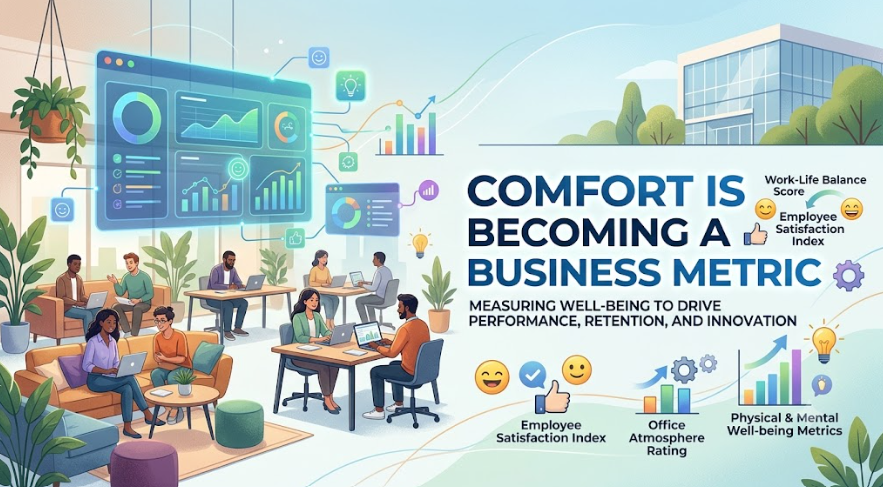
- Comfort Is Becoming a Business Metric
- Why Comfort Is Becoming a Business Metric
- Employee Comfort Directly Impacts Workplace Productivity
- Comfortable Workspaces Encourage Better Decisions
- Ergonomic Office Furniture Supports Growth
- Measuring Comfort Like Other Business KPIs
- The Future of Comfortable Workplaces
- Final Thoughts
- Frequently Asked Questions
Comfort Is Becoming a Business Metric
Comfortable workspace for organisations that want to improve employee performance, workplace culture, and long-term business growth. A few years ago, workplace comfort was often viewed as a nice-to-have benefit. Companies focused on reducing costs, increasing efficiency, and purchasing office furniture that simply fulfilled a functional purpose. Today, that mindset is changing rapidly.
Business leaders now recognise that workplace comfort directly influences how employees think, collaborate, solve problems, and perform throughout the day. An employee who feels physically comfortable is far more likely to remain engaged than someone who spends hours adjusting an uncomfortable chair or dealing with poor workstation ergonomics.
This shift explains why Workplace comfort across organisations of every size. Companies are no longer measuring success only through revenue, sales targets, or operational efficiency. They are increasingly evaluating workplace conditions that influence employee performance, including Employee Comfort, workspace design, and the quality of Ergonomic Office Furniture.
Modern workplaces are designed around people rather than simply around processes. Employees expect workspaces that support their wellbeing while enabling them to remain productive throughout demanding workdays. Businesses that respond to these expectations often experience stronger employee engagement, improved retention, and higher Workplace Productivity.
Business Insight
The organisations achieving sustainable growth aren’t simply investing in technology. They’re investing in environments where employees can consistently perform at their best.
Creating a Comfortable Workspace is no longer limited to adding stylish furniture or premium interiors. It involves carefully selecting ergonomic seating, planning collaborative workspaces, improving workstation layouts, and ensuring employees have the physical support they need throughout the day.
Forward-thinking companies also understand that investing in
Ergonomic Office Furniture
isn’t simply an operational expense. It’s an investment in employee wellbeing that supports productivity, reduces workplace fatigue, and creates healthier working habits over time.
“Businesses measure what matters. Today, comfort is becoming one of those measurable drivers of performance.”
Research continues to reinforce this connection. According to the
OSHA Computer Workstations Guide
,
well-designed workstations help reduce physical strain during prolonged desk work, supporting healthier and more efficient workplaces.
Throughout this guide, we’ll explore why Comfort Is Becoming a Business Metric, how Employee Comfort influences business performance, and why investing in better workplace design delivers measurable returns beyond employee satisfaction alone.
1. Why Comfort Is Becoming a Business Metric
Every successful business tracks key performance indicators. Revenue, profitability, customer satisfaction, and operational efficiency are all carefully measured because they influence long-term success. Increasingly, organisations are adding another important indicator to that list—employee comfort.
The reason is straightforward. Employees perform better when they feel supported by their working environment. A thoughtfully designed office removes unnecessary physical distractions, allowing employees to focus their energy on solving problems, collaborating with colleagues, and delivering meaningful results.
When Comfort Is Becoming a Business Metric, organisations begin asking different questions. Instead of simply purchasing office chairs based on price, they evaluate how effectively each chair supports employees throughout an entire workday. Instead of choosing office layouts based solely on available space, they consider how those environments influence communication, creativity, and focus.
A modern Comfortable Workspace combines ergonomic seating, efficient workstation layouts, collaborative areas, and flexible working environments that adapt to different employee needs. These improvements create measurable benefits that extend far beyond physical comfort.
Why Businesses Measure Workplace Comfort
- Improves Employee Comfort throughout the working day.
- Supports higher Workplace Productivity.
- Encourages healthier posture and movement.
- Strengthens employee engagement.
- Creates a more Comfortable Workspace.
- Enhances long-term organisational performance.
Companies that invest in quality
office furniture solutions
are often better positioned to support hybrid work, collaborative environments, and future workplace growth. Rather than treating workplace comfort as a luxury, they recognise it as an essential part of building resilient and productive organisations.
Ultimately, Comfort Is Becoming a Business Metric because businesses now understand a simple truth: when employees work comfortably, they work better.
2. Employee Comfort Directly Impacts Workplace Productivity
As Comfort Is Becoming a Business Metric, organisations are paying closer attention to how physical work environments influence daily performance. Employee productivity isn’t determined only by skills, technology, or management practices. It is also shaped by how comfortable employees feel throughout the working day. A supportive environment allows people to stay focused for longer, collaborate effectively, and complete tasks with greater efficiency.
One of the biggest contributors to productivity is Employee Comfort. Employees who work in a well-designed office with ergonomic seating and properly arranged workstations spend less time dealing with discomfort and more time concentrating on meaningful work. Small improvements in workplace comfort often produce significant gains when repeated across an entire organisation.
Imagine an employee spending eight hours in a chair that lacks lumbar support or proper adjustability. Throughout the day, they constantly shift positions, stretch to relieve discomfort, or take unnecessary breaks because of physical fatigue. These interruptions may seem minor individually, but together they reduce overall Workplace Productivity.
By comparison, a Comfortable Workspace equipped with Ergonomic Office Furniture enables employees to remain focused without being distracted by physical discomfort. When the workplace supports the body, employees can dedicate more energy to problem-solving, creativity, and collaboration.
How Employee Comfort Improves Workplace Productivity
- Reduces unnecessary distractions during work.
- Supports better concentration on complex tasks.
- Encourages healthier sitting posture.
- Helps employees maintain consistent energy levels.
- Improves collaboration during meetings.
- Creates a more Comfortable Workspace for every team member.
Businesses that recognise Comfort Is Becoming a Business Metric understand that workplace comfort isn’t only about reducing complaints. It’s about creating an environment where employees can consistently perform at their highest level. Comfortable teams communicate more effectively, make better decisions, and contribute more confidently to organisational goals.
The
Mayo Clinic Office Ergonomics Guide
highlights how properly adjusted office furniture helps minimise muscle strain and encourages healthier working habits. Investing in ergonomic seating therefore benefits both employees and employers over the long term.
“When employees stop thinking about discomfort, they start thinking more clearly about their work.”
Forward-thinking organisations increasingly view Employee Comfort as a strategic advantage rather than an employee perk. By combining ergonomic furniture with thoughtful office design, businesses create work environments that naturally encourage higher Workplace Productivity while supporting employee wellbeing.
3. Ergonomic Office Furniture Supports Long-Term Business Growth
When discussing workplace investments, businesses often focus on technology, software, and infrastructure. While these investments are essential, physical work environments deserve equal attention. As Comfort Is Becoming a Business Metric, more organisations are recognising that Ergonomic Office Furniture directly contributes to sustainable business growth.
Quality office furniture should do more than simply fill an office space. It should support employees through changing work styles, different body types, and evolving organisational needs. Adjustable office chairs, ergonomic desks, and flexible workstations create a Comfortable Workspace where employees remain productive regardless of how their responsibilities change.
Investing in Ergonomic Office Furniture also delivers measurable financial benefits over time. Durable, high-quality seating requires fewer replacements, lower maintenance costs, and provides consistent support for employees year after year. Rather than viewing ergonomic furniture as an expense, successful organisations increasingly consider it a long-term business asset.
Business Benefits of Ergonomic Office Furniture
- Supports Employee Comfort every day.
- Improves Workplace Productivity.
- Creates a healthier Comfortable Workspace.
- Reduces long-term furniture replacement costs.
- Supports hybrid and collaborative work environments.
- Strengthens employee satisfaction and engagement.
Companies upgrading their workplace can explore
high back ergonomic office chairs
that combine adjustability, durability, and modern design. These seating solutions are built to support employees during extended working hours while maintaining consistent comfort throughout the day.
Organisations should also maintain their office furniture to maximise its lifespan. Regular servicing through
OffheMan Installation & Repair Services
helps ensure ergonomic chairs continue performing efficiently while protecting the company’s investment.
Ultimately, as Comfort Is Becoming a Business Metric, businesses are discovering that comfortable employees contribute to healthier workplaces, stronger collaboration, improved productivity, and better long-term organisational performance. Investing in ergonomic office furniture isn’t simply about purchasing chairs—it’s about creating an environment where people can consistently perform their best.
4. Comfortable Workspaces Improve Employee Wellbeing and Business Performance
As Comfort Is Becoming a Business Metric, businesses are beginning to understand that employee wellbeing is directly connected to organisational success. A workplace that prioritises Employee Comfort creates an environment where people can perform consistently without being distracted by physical discomfort or workplace fatigue.
Modern professionals spend nearly one-third of their day at work. Whether employees are attending virtual meetings, analysing reports, designing presentations, or collaborating with colleagues, their physical environment significantly influences how effectively they perform. A thoughtfully designed Comfortable Workspace helps employees maintain better posture, reduce unnecessary strain, and remain engaged throughout the workday.
Beyond physical health, workplace comfort also affects mental wellbeing. Employees who feel comfortable in their work environment often experience lower stress levels, greater job satisfaction, and stronger motivation. This positive experience encourages creativity, collaboration, and higher-quality decision-making, all of which contribute to improved Workplace Productivity.
How Comfortable Workspaces Benefit Employees
- Promote healthier posture during long working hours.
- Reduce physical fatigue and discomfort.
- Support better concentration and focus.
- Improve collaboration among teams.
- Increase Employee Comfort throughout the day.
- Create a positive and engaging workplace culture.
Businesses investing in Ergonomic Office Furniture aren’t simply purchasing office chairs or desks. They’re creating an environment where employees can perform comfortably without constantly adjusting their seating or taking unnecessary breaks because of discomfort. This results in smoother workflows, higher engagement, and improved overall business performance.
According to the
National Institute for Occupational Safety and Health (NIOSH)
,
ergonomic workplace design helps minimise physical stress while supporting healthier and safer working environments. These improvements become increasingly valuable as businesses continue adopting hybrid and flexible work models.
“Employees who feel comfortable are more likely to stay focused, collaborate effectively, and contribute their best work every day.”
Creating a Comfortable Workspace also strengthens company culture. Employees notice when organisations invest in their wellbeing, and that investment often translates into greater trust, stronger engagement, and improved workplace relationships.
5. Measuring Comfort Like Any Other Business KPI
Successful organisations rely on measurable data to make informed decisions. Revenue, customer satisfaction, project completion rates, and operational efficiency are all tracked because they influence long-term success. Increasingly, Comfort Is Becoming a Business Metric that deserves similar attention.
Rather than treating workplace comfort as a subjective opinion, businesses can evaluate measurable indicators that reflect the effectiveness of their office environment. Employee surveys, absenteeism rates, productivity levels, workstation utilisation, retention statistics, and engagement scores all provide valuable insight into how comfortable employees feel in their workplace.
For example, if employees consistently report discomfort during long working hours, organisations can investigate whether outdated seating, poor workstation layouts, or insufficient ergonomic support are contributing factors. Addressing these issues with quality Ergonomic Office Furniture often produces improvements that extend far beyond physical comfort.
Business Metrics Influenced by Workplace Comfort
- Employee engagement scores.
- Workplace Productivity.
- Employee retention.
- Absenteeism and workplace fatigue.
- Team collaboration.
- Overall Employee Comfort.
- Job satisfaction and morale.
Businesses that monitor these indicators are better equipped to create continuous workplace improvements. Instead of waiting for employees to report problems, leaders can proactively optimise office environments using ergonomic seating, better workspace planning, and modern office furniture solutions.
Companies looking to upgrade their workplace can explore the latest
office furniture insights on the OffheMan Blog
to discover practical strategies for improving employee wellbeing, office design, and workplace productivity.
Ultimately, when Comfort Is Becoming a Business Metric, businesses shift from reactive problem-solving to proactive workplace planning. This creates healthier employees, stronger organisational performance, and a workplace that supports sustainable growth well into the future.
6. The Future of Business Success Starts with Employee Comfort
The workplace continues to evolve, and so do employee expectations. Flexible work models, hybrid offices, wellness initiatives, and people-first cultures are becoming standard across industries. As these changes accelerate, Comfort Is Becoming a Business Metric that organisations simply cannot afford to ignore.
Today’s workforce expects more than attractive office interiors. Employees want environments that support their wellbeing, help them stay productive, and enable them to perform their best every day. Investing in Employee Comfort is no longer viewed as an employee benefit—it is increasingly recognised as a strategic business decision that delivers measurable returns.
A thoughtfully designed Comfortable Workspace combines ergonomic seating, collaborative spaces, proper workstation layouts, and flexible office furniture that adapts to different working styles. These elements create a workplace where employees feel valued, motivated, and engaged.
Why Forward-Thinking Businesses Prioritise Comfort
- Supports long-term Employee Comfort.
- Improves Workplace Productivity across teams.
- Creates healthier working environments.
- Strengthens employee engagement and retention.
- Enhances collaboration and creativity.
- Provides better return on office furniture investments.
- Builds a stronger employer brand.
Leading organisations are already redesigning offices around employee needs rather than simply maximising desk space. Comfortable seating, quiet focus areas, collaborative zones, and adaptable furniture create work environments where people can work efficiently while maintaining their physical wellbeing.
Businesses planning future office upgrades should consider investing in premium
Ergonomic Office Furniture
that combines comfort, adjustability, and durability. These solutions support employees throughout long working hours while creating workplaces designed for sustainable growth.
“Businesses that invest in employee comfort today are investing in stronger performance tomorrow.”
The relationship between workplace comfort and business success will only become stronger in the coming years. Companies that recognise this shift early will build healthier workplaces, attract better talent, and maintain higher levels of employee satisfaction than organisations that continue treating comfort as an optional expense.
Final Thoughts
Comfort Is Becoming a Business Metric because businesses now understand that workplace comfort directly influences productivity, employee engagement, wellbeing, and long-term organisational performance. Comfortable employees remain focused longer, collaborate more effectively, and contribute more consistently to business success.
Rather than viewing ergonomic furniture as an additional expense, forward-thinking organisations recognise it as an investment in people. High-quality Ergonomic Office Furniture helps create a Comfortable Workspace that supports both individual performance and overall business growth.
At
OffheMan,
we believe every workplace should be designed around the people who use it. Our ergonomic office chairs and modern office furniture solutions are built to improve Employee Comfort, enhance Workplace Productivity, and help organisations create workspaces that are ready for the future.
Frequently Asked Questions
1. What does “Comfort Is Becoming a Business Metric” mean?
It means businesses are beginning to measure workplace comfort because it directly impacts employee performance, engagement, wellbeing, and overall business success.
2. Why is Employee Comfort important?
Employee Comfort reduces physical fatigue, improves concentration, encourages better posture, and helps employees remain productive throughout the working day.
3. How does Ergonomic Office Furniture improve Workplace Productivity?
Ergonomic Office Furniture supports proper posture, reduces discomfort, and allows employees to work comfortably for longer periods, leading to improved Workplace Productivity.
4. What creates a Comfortable Workspace?
A Comfortable Workspace includes ergonomic office chairs, adjustable workstations, proper lighting, organised layouts, and furniture designed to support employee wellbeing.
5. Does workplace comfort improve employee retention?
Yes. Employees who feel comfortable and supported are generally more satisfied with their workplace, contributing to stronger engagement and improved retention.
6. How can businesses measure workplace comfort?
Businesses can monitor employee feedback, productivity levels, absenteeism, engagement surveys, workstation assessments, and overall employee satisfaction.
7. Is investing in Ergonomic Office Furniture worth it?
Absolutely. Quality ergonomic furniture improves Employee Comfort, supports Workplace Productivity, reduces replacement costs, and provides long-term business value.
8. Where can businesses find ergonomic office furniture?
Explore the complete range of ergonomic office chairs, executive seating, and workplace solutions at
OffheMan, designed to help businesses create healthier, more productive, and comfortable work environments.
Explore More from OffheMan
Looking to create a more productive workplace?

 No products in the cart.