
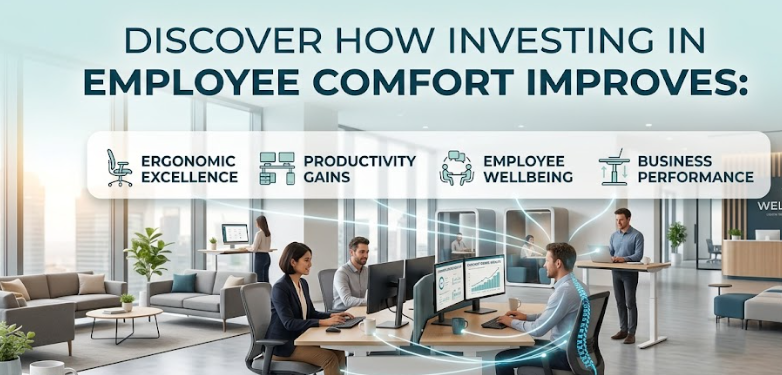
Employee Comfort Is More Than a Workplace Perk—It’s a Business Investment
healthy workplace is often viewed as an optional workplace benefit rather than a strategic business investment. Many organisations allocate budgets for technology, software, marketing, and recruitment but hesitate when it comes to upgrading an ergonomic office furniture setup or replacing an ageing office chair. The assumption is simple: if employees have somewhere to sit and a desk to work from, that’s enough. The reality is very different. Employees spend nearly one-third of their day at work. During that time, every interaction with their workspace influences how they feel, how effectively they concentrate, and ultimately how productive they become. A comfortable chair, an organised workstation, and a thoughtfully designed office environment don’t simply improve convenience—they improve decision-making, collaboration, and long-term business performance. Business leaders often ask whether investing in better workplaces delivers measurable returns. The answer is yes. The return isn’t limited to happier employees. Better Employee Comfort contributes to higher Employee Productivity, reduced absenteeism, improved employee satisfaction, stronger retention, and better overall business outcomes.Business Insight
Companies don’t generate results through office furniture alone—they generate results through people. Creating an environment where employees can work comfortably allows them to perform at their full potential.
1. The Hidden Cost of Ignoring Employee Comfort
Most business expenses appear on financial statements. Poor Employee Comfort rarely does. Instead, its impact shows up indirectly through reduced concentration, slower work, increased fatigue, frequent discomfort, and lower employee engagement. Imagine an employee sitting in an uncomfortable chair for eight hours every day. They shift positions constantly, stand up repeatedly to stretch, and lose focus because physical discomfort becomes impossible to ignore. These interruptions may last only a few minutes each time, but across weeks, months, and years, they represent a significant loss in Employee Productivity. Many organisations underestimate how strongly the physical workplace affects performance. Simple improvements such as ergonomic seating, adjustable desks, and supportive workstations create a healthier environment where employees can focus on their responsibilities instead of their discomfort. The relationship between workplace ergonomics and productivity is well documented. The OSHA Computer Workstations Guide explains how properly designed workstations reduce physical strain during prolonged desk work. Similarly, the Mayo Clinic’s Office Ergonomics Guide highlights how supportive seating and proper workstation setup contribute to healthier posture and improved comfort throughout the workday.2. Employee Comfort Drives Workplace Productivity Every Day
When businesses discuss improving Business Performance, the conversation usually centres around technology, automation, training, or performance management. While these are all valuable investments, one important factor is often overlooked—Employee Comfort. Employees cannot consistently perform at their best if they are distracted by physical discomfort. An uncomfortable office chair, a poorly designed workstation, or inadequate support throughout the workday gradually affects concentration. Instead of focusing entirely on solving problems, employees spend valuable time adjusting their seating position, stretching, or taking unnecessary breaks simply to relieve discomfort. Although these interruptions may appear insignificant, they accumulate over time. A few minutes lost every hour can translate into dozens of unproductive hours over the course of a month. Improving Employee Comfort helps eliminate these small barriers, allowing employees to remain focused on meaningful work instead of physical discomfort.Did You Know?
The most productive employees aren’t necessarily the ones who work longer hours. They’re the ones who can stay focused without constantly being interrupted by discomfort or an inefficient workspace.
3. Ergonomic Office Furniture Reduces Long-Term Business Costs
Many businesses hesitate before upgrading workplace furniture because they focus only on the initial purchase price. However, evaluating workplace investments solely by upfront cost often ignores the much larger financial picture. Quality ergonomic office furniture is designed for durability, adjustability, and long-term employee support. While premium furniture may require a larger initial investment, it frequently lasts significantly longer than lower-quality alternatives while delivering measurable improvements in Employee Comfort. A well-designed office chair helps employees maintain healthier posture, reduces pressure on the lower back, and encourages natural movement throughout the day. These benefits contribute to improved employee wellbeing while reducing discomfort associated with prolonged sitting.Long-Term Business Benefits
- Reduced workplace discomfort.
- Lower furniture replacement costs.
- Fewer maintenance requirements.
- Improved employee wellbeing.
- Higher Employee Performance.
- Better employee satisfaction.
Business Perspective
The true return on Employee Comfort isn’t measured by the cost of a chair. It’s measured by years of improved performance, healthier employees, and a workplace where people can consistently do their best work.
4. Employee Comfort Improves Employee Wellbeing and Retention
Every organisation wants to attract talented professionals, but retaining them is often the bigger challenge. Competitive salaries and attractive benefits may bring employees through the door, but what keeps them engaged is their day-to-day experience. One of the most overlooked factors influencing retention is Employee Comfort. Employees spend nearly eight hours a day in the workplace. If those hours are filled with physical discomfort, poor workstation design, or an unsupportive office chair, job satisfaction gradually declines. While discomfort may not be the sole reason someone leaves an organisation, it often contributes to a less enjoyable work experience over time. On the other hand, businesses that invest in ergonomic office furniture demonstrate that employee wellbeing is more than a statement in the company handbook. Comfortable workstations help employees feel valued, respected, and supported throughout their working day.Why Comfort Influences Retention
- Employees experience less physical fatigue during long working hours.
- Comfortable workspaces improve job satisfaction.
- Better workplace experiences strengthen employee loyalty.
- Healthy work environments encourage long-term engagement.
- Positive first impressions increase confidence in the organisation.
5. The ROI of Employee Comfort Goes Beyond Financial Returns
When businesses calculate return on investment (ROI), they usually focus on measurable financial metrics such as revenue, operating costs, or profit margins. However, some of the most valuable returns are less obvious. Investing in Employee Comfort creates benefits that extend far beyond accounting reports. A comfortable workplace encourages employees to think more creatively, communicate more effectively, and collaborate with greater confidence. These improvements influence decision-making, customer service, project delivery, and overall organisational performance. Businesses often discover that comfortable employees are more engaged in their work. They participate more actively in meetings, contribute new ideas, and maintain higher levels of motivation throughout demanding projects. Over time, these behaviours contribute directly to stronger Organisational Performance.Business Benefits of Employee Comfort
- Higher Team Performance.
- Improved employee wellbeing.
- Better collaboration across teams.
- Greater employee engagement.
- Enhanced employer reputation.
- Long-term operational efficiency.
Key Takeaway
Businesses that treat Employee Comfort as a strategic investment—not just an operational expense—create workplaces that improve employee wellbeing, strengthen Operational Efficiency, and support sustainable business growth for years to come.
6. How to Measure the ROI of Employee Comfort
Many business leaders understand the importance of workplace comfort, but they often ask one question before investing: How do we measure the return? Unlike machinery or software, the benefits of workplace improvements aren’t always reflected in a single financial report. Instead, they appear across multiple business metrics that collectively determine organisational success. The return on investing in Employee Comfort can be measured through improvements in Overall Productivity, employee engagement, retention, absenteeism, collaboration, and overall workplace satisfaction. While these metrics may seem unrelated at first, they are closely connected to how employees experience their work environment every day. For example, replacing outdated seating with an ergonomic office chair may reduce discomfort during long working hours. Employees remain focused for longer periods, meetings become more productive, and fewer interruptions occur throughout the day. These improvements eventually translate into better work quality and improved business performance.Key Metrics Businesses Should Track
- Employee productivity and task completion rates.
- Employee satisfaction survey results.
- Retention and turnover rates.
- Absenteeism and sick leave trends.
- Workplace engagement scores.
- Collaboration and team performance.
- Maintenance and replacement costs for office furniture.
7. Employee Comfort Is a Long-Term Competitive Advantage
In today’s competitive business landscape, attracting talented professionals is only part of the challenge. Creating an environment where they can consistently perform at their best is what separates successful organisations from the rest. Businesses that prioritise workplace wellbeing are investing in far more than chairs and desks. They’re building workplaces that encourage collaboration, support creativity, improve focus, and strengthen employee wellbeing. These advantages accumulate over time, creating a healthier and more productive workforce. High-quality ergonomic office furniture also supports a company’s employer brand. Job candidates increasingly evaluate workplaces before accepting offers. Modern workstations, comfortable meeting rooms, and thoughtfully designed office spaces communicate professionalism and demonstrate that employees are genuinely valued.Why Leading Businesses Invest in Employee Comfort
- Improves Work Output.
- Supports employee wellbeing.
- Strengthens employee retention.
- Creates a positive workplace culture.
- Enhances employer branding.
- Delivers measurable long-term ROI.

 No products in the cart.