
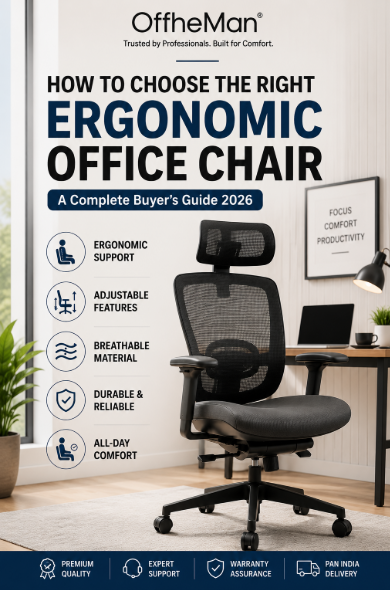
How to Choose the Right Ergonomic Office Chair is more important than most people realise. Whether you work from home or in an office, the right chair can improve comfort, support better posture, and make long working hours more manageable.
Many buyers focus on design or price but overlook the features that truly matter. At OffheMan, we’ve found that most people are simply looking for a chair that stays comfortable throughout the day—not just during a quick showroom trial.
This guide explains what to look for in an ergonomic office chair, the features worth investing in, and how to choose the right model for your workspace and daily routine.
Why This Guide Is Different
Most buying guides compare specifications and rankings. This guide takes a more practical approach. Instead of telling you which chair is “number one,” we’ll explain how to evaluate an ergonomic office chair based on your body type, work routine, workspace, and budget.
Our goal is simple: help you invest in a chair that still feels comfortable after years of daily use—not just during the first five minutes.
Why Choosing the Right Office Chair Matters
Think about how much time you spend sitting every week. Between emails, virtual meetings, focused work, planning sessions, and video calls, many professionals remain seated for seven to ten hours each day.
That’s why your office chair should be viewed as an investment rather than an accessory. A well-designed ergonomic office chair supports your natural sitting posture, encourages movement, and provides consistent comfort during long working hours.
Comfort alone isn’t enough, though. Adjustability is equally important. Everyone has different heights, body proportions, and working styles, so the ideal chair should adapt to you—not the other way around.
“The best ergonomic office chair isn’t necessarily the most expensive one. It’s the chair that quietly supports you throughout your workday without constantly reminding you it’s there.”
If you’re exploring different seating options, browse the OffheMan Office Chair Collection to compare models designed for home offices, startups, and corporate workplaces.
It’s also worth understanding the basics of workstation ergonomics. Resources from the Occupational Safety and Health Administration (OSHA) and the Mayo Clinic explain how proper seating, desk height, and monitor positioning contribute to a more comfortable workspace.
What You’ll Learn in This Guide
- What makes an office chair truly ergonomic.
- The essential features that improve long-term comfort.
- Mesh vs cushioned office chairs.
- High-back vs mid-back office chairs.
- Common buying mistakes to avoid.
- Practical tips from the OffheMan team.
Let’s begin with the most common question buyers ask: What actually makes an office chair ergonomic?
How to Choose the Right Ergonomic Office Chair: What Makes a Chair Truly Ergonomic?
Today, almost every office chair is advertised as “ergonomic.” Browse any furniture website and you’ll find the term everywhere—from entry-level chairs to premium executive seating. But in reality, not every chair deserves that label.
An ergonomic office chair isn’t defined by its appearance or the number of adjustment levers it has. It’s defined by how well it supports your body during long working hours. The goal of ergonomics is simple: the chair should adapt to your body instead of forcing your body to adapt to the chair.
If you’ve ever finished a workday with a sore back, stiff shoulders, or tired legs, there’s a good chance your current chair isn’t providing the support you need. Small design details can make a surprisingly big difference when you’re sitting for seven or eight hours every day.
That’s why choosing the right ergonomic office chair should always start with understanding the features that genuinely improve comfort—not just the ones highlighted in marketing brochures.
7 Features Every Ergonomic Office Chair Should Have
When comparing office chairs, don’t get distracted by long specification sheets. Instead, focus on these essential features that contribute to everyday comfort and long-term usability.
- Adjustable Lumbar Support
Your lower back naturally curves inward, and a good ergonomic office chair should support that curve instead of allowing you to slump forward. Adjustable lumbar support lets you position the support exactly where your body needs it, making it suitable for users of different heights.
If you spend most of your day at a desk, this is one feature that’s worth prioritising over almost everything else.
2. Seat Height Adjustment
Proper sitting posture begins with the correct seat height. Your feet should rest flat on the floor, while your knees remain roughly level with your hips. Most ergonomic office chairs include a gas-lift mechanism, but many users never take the time to adjust it correctly.
A small adjustment here can significantly improve comfort during long working hours.
3. Breathable Backrest
For many professionals across India, especially in warmer cities, a breathable mesh backrest is a practical choice. Better airflow helps reduce heat build-up, making the chair more comfortable during extended work sessions.
That doesn’t automatically mean mesh is better than cushioning. Both have advantages, but ventilation is one reason mesh chairs continue to be popular in modern workplaces.
Quick Tip
If your office isn’t fully air-conditioned or you work from home in a warmer climate, a breathable mesh ergonomic office chair is often the more comfortable choice for daily use.
4. Adjustable Armrests
Armrests do more than provide a place to rest your elbows. Properly adjusted armrests help reduce tension in your shoulders, neck, and wrists while typing or using a mouse.
Look for chairs with height-adjustable armrests at a minimum. If multiple people use the same chair, additional armrest adjustments can improve flexibility even further.
5. Reclining Mechanism
Many people believe sitting perfectly upright all day is the healthiest posture. In reality, our bodies are designed to move. A smooth reclining mechanism encourages small posture changes throughout the day, reducing continuous pressure on your lower back.
Features such as tilt tension adjustment and recline lock allow you to switch comfortably between focused work and short breaks without compromising support.
6. High-Density Seat Cushion
Comfort isn’t about having the softest seat—it’s about having the right support. High-density moulded foam maintains its shape much longer than low-density cushioning, providing more consistent comfort over time.
If you’re investing in an office chair you’ll use every day, the quality of the seat cushion deserves just as much attention as the backrest.
7. Strong Base and Smooth Mobility
The wheelbase is often overlooked, yet it’s one of the hardest-working components of any office chair. A durable metal or reinforced nylon base provides better stability, while high-quality castor wheels allow smooth movement across different floor surfaces.
These details may seem minor initially, but they contribute significantly to the overall user experience over the lifetime of the chair.
OffheMan Buying Tip
Instead of comparing chairs based only on price, compare what you can actually adjust. A chair with proper lumbar support, adjustable armrests, a reclining mechanism, and quality cushioning will usually provide greater long-term value than one that simply looks more premium.
If you’re comparing different models, explore the OffheMan Ergonomic Office Chair Collection to understand how these features vary across different chair designs and price ranges.
Now that you know what makes a chair genuinely ergonomic, the next question becomes equally important: Should you choose a mesh office chair or a cushioned chair? And is a high-back chair always the better option?
How to Choose the Right Ergonomic Office Chair: Mesh vs Cushioned Chairs
One of the biggest questions buyers ask before purchasing an office chair is whether a mesh chair is better than a cushioned one. The truth is that there isn’t a universal answer. Both designs have their own advantages, and the right choice depends on your work environment, personal comfort, and how long you typically remain seated each day.
We’ve seen customers walk into the showroom convinced they wanted a premium cushioned executive chair, only to discover that a breathable mesh chair suited their daily work routine much better. Others preferred the softer feel of a well-padded seat after trying several options. That’s why comfort should always come before appearance.
When a Mesh Office Chair Makes Sense
Mesh office chairs have become increasingly popular, especially in modern workplaces across India. The biggest advantage is ventilation. During long working hours, a breathable mesh backrest allows better airflow, helping reduce heat build-up and keeping you comfortable throughout the day.
They’re particularly suitable for professionals working in warmer climates or offices where air conditioning isn’t always running. A good-quality mesh also maintains its shape well over time, providing consistent support without feeling heavy.
Quick Tip
If you spend more than eight hours sitting every day, a high-quality mesh ergonomic office chair often provides a cooler and more comfortable experience during extended work sessions.
When a Cushioned Office Chair Is the Better Option
Cushioned office chairs remain a popular choice for executive cabins, conference rooms, and premium office interiors. High-density foam provides a softer seating experience, making these chairs particularly comfortable for people who prefer extra cushioning.
The important factor isn’t simply the amount of padding but its quality. Premium moulded foam retains its shape much longer than standard foam, helping maintain comfort even after years of regular use.
If your workspace remains air-conditioned throughout the day, the difference between mesh and cushioning becomes less significant, allowing personal preference to play a bigger role.
High Back vs Mid Back: Which Is Right for You?
Another common misconception is that a high-back chair is automatically better than a mid-back chair. In reality, both serve different purposes.
High Back Office Chairs
High-back office chairs provide additional support for your upper back, shoulders, and neck. They are often preferred by professionals who spend long hours working at a desk, attending virtual meetings, or performing tasks that require extended concentration.
Combined with adjustable lumbar support and a reclining mechanism, high-back chairs create a comfortable seating experience for users who rarely leave their workstation during the day.
Mid Back Office Chairs
Mid-back chairs are lighter, more compact, and work particularly well in collaborative offices, coworking spaces, reception areas, and home offices. They provide excellent lower and middle back support while occupying less visual space, making them a practical choice for smaller workstations.
For professionals who frequently move between meetings or don’t spend the entire day seated, a quality mid-back chair often offers all the support they need.
Common Mistakes to Avoid When Buying an Office Chair
After helping hundreds of customers choose office furniture, we’ve noticed the same buying mistakes appear again and again. Avoiding them can save both money and frustration.
1. Buying Based Only on Looks
A chair might look premium in photographs but still fail to provide proper support. Comfort should always come before aesthetics.
2. Ignoring Adjustability
Height adjustment alone doesn’t make a chair ergonomic. Features like lumbar support, adjustable armrests, and reclining mechanisms make a noticeable difference during long working hours.
3. Choosing Price Over Value
Buying the cheapest chair available often leads to higher replacement costs later. A durable chair with quality components usually provides better long-term value.
4. Not Considering Daily Usage
A chair used for two hours each day has very different requirements from one used for eight or more hours. Your work routine should always influence your buying decision.
5. Skipping the Trial
If you’re visiting a showroom, don’t make your decision after sitting for only a minute. Adjust the chair, lean back, type for a few minutes, and notice how your body feels. Those extra few minutes often reveal more than a specification sheet ever can.
OffheMan Recommendation
Still comparing different models? Explore the OffheMan Office Chair Collection to compare ergonomic, executive, high-back, and mid-back office chairs based on your workspace, budget, and daily usage.
“The right office chair isn’t the one with the highest price tag—it’s the one that fits your body, supports your work style, and still feels comfortable at the end of a busy day.”
Once you’ve decided which type of chair suits your needs, the final step is learning how to test an ergonomic office chair properly before buying it. That’s exactly what we’ll cover next.
How to Test an Ergonomic Office Chair Before Buying
Even the best product description can’t tell you exactly how a chair will feel after an entire workday. If you have the opportunity to visit a showroom, spend at least 10–15 minutes testing different models instead of making a decision within a few seconds. A chair that feels comfortable initially should continue feeling comfortable after you’ve adjusted it properly and sat in it for a while.
If you’re buying online, don’t just compare prices. Read the specifications carefully, understand which features are adjustable, check the warranty, and review the return policy before placing your order. A little research today can prevent an expensive replacement later.
Adjust the Chair Before Judging It
Every ergonomic office chair is designed to be adjusted. Sitting in the default factory settings won’t give you an accurate idea of how the chair will perform.
Start by adjusting the seat height so your feet rest flat on the floor and your knees remain close to a 90-degree angle. Then position the lumbar support to match the natural curve of your lower back. Finally, adjust the armrests until your shoulders feel relaxed and your elbows remain close to your body while typing.
These simple adjustments take less than two minutes but can completely change how a chair feels.
Quick Test
Sit normally, close your eyes for a moment, and pay attention to your body. If you immediately feel pressure on your lower back, shoulders, or thighs, try adjusting the chair first. If the discomfort remains after a few adjustments, it’s probably not the right chair for you.
Choosing the Right Chair for Your Workspace
Different work environments have different seating requirements. A chair that’s perfect for a corporate office may not be the best option for a compact home workspace.
For Home Offices
Professionals working from home usually benefit from a breathable ergonomic office chair with adjustable lumbar support, reclining functionality, and a compact design. Since the chair often shares space with the rest of your home, appearance and size become almost as important as comfort.
For Startups & Growing Businesses
Startups often look for chairs that balance durability, comfort, and value. Investing in adjustable ergonomic chairs from the beginning helps create a more comfortable working environment while reducing future replacement costs.
For Corporate Offices
Large organisations usually prioritise consistency across workstations. Choosing ergonomic office chairs with reliable adjustment mechanisms ensures employees receive a similar seating experience regardless of department or seating location.
Why After-Sales Support Matters
Buying an office chair isn’t just about the product itself. Over time, components such as gas lifts, castor wheels, armrests, or tilt mechanisms may require maintenance or replacement. Choosing a brand that offers dependable after-sales support can extend the life of your chair and improve its overall value.
If you already own an OffheMan chair, you can explore our Installation & Repair Services for assembly assistance, maintenance, and product support.
Before You Make Your Final Decision
It’s easy to get distracted by premium finishes, executive styling, or long feature lists, but the right office chair is the one that suits your daily routine. Consider how many hours you work, whether you prefer a mesh or cushioned backrest, how much adjustability you actually need, and how the chair fits into your workspace.
If possible, compare two or three different models before making your decision. Small differences in lumbar support, seat cushioning, and overall ergonomics become much more noticeable when tested side by side.
OffheMan Expert Tip
Don’t buy an office chair because it’s trending or because someone else recommends it. The best ergonomic office chair is the one that fits your height, your posture, and your way of working. Spending a little extra time comparing options today can help you avoid years of discomfort later.
Now that you know how to compare, test, and evaluate different chairs, let’s answer some of the most frequently asked questions before you make your final purchase.
Frequently Asked Questions
Which ergonomic office chair is best for long working hours?
The best ergonomic office chair is one that matches your body type and daily work routine. Look for adjustable lumbar support, seat height adjustment, quality cushioning, adjustable armrests, and a reclining mechanism. Rather than focusing only on price or appearance, choose a chair that keeps you comfortable throughout an entire workday.
Are mesh office chairs better than cushioned office chairs?
Both have their advantages. Mesh office chairs provide better airflow and are ideal for warmer climates, while cushioned chairs offer a softer seating experience. The better option depends on your comfort preference, office environment, and how many hours you spend sitting each day.
How long should an ergonomic office chair last?
A well-built ergonomic office chair can last between five and ten years with proper care. Regular cleaning, correct usage, and timely maintenance help extend the chair’s lifespan and ensure consistent comfort.
Can an ergonomic chair improve posture?
An ergonomic office chair supports your natural sitting position and encourages better posture, but it isn’t a replacement for healthy work habits. Standing up regularly, stretching, and adjusting your workstation correctly are equally important for long-term comfort.
How much should I spend on an ergonomic office chair?
There isn’t a single ideal budget. Instead of buying the most expensive chair, invest in one that offers essential ergonomic adjustments, quality materials, and dependable after-sales support. A chair you’ll use every day should be viewed as a long-term investment rather than a short-term purchase.
Quick Buying Checklist
- Adjustable lumbar support
- Height-adjustable seat
- Adjustable armrests
- Breathable mesh or premium cushioning
- Smooth reclining mechanism
- High-density seat foam
- Strong metal or reinforced nylon base
- Reliable warranty and after-sales support
- Suitable for your daily working hours
Final Thoughts
Choosing the right ergonomic office chair isn’t about finding the chair with the longest feature list—it’s about finding one that fits your body, your workspace, and the way you work every day. A few minutes spent comparing adjustability, comfort, build quality, and support can make a noticeable difference over the years you’ll use the chair.
Whether you’re creating a home office, upgrading your company’s workspace, or replacing an old chair that’s no longer comfortable, focusing on quality ergonomics today can help improve comfort, productivity, and everyday working experience.
If you’re still comparing options, explore the OffheMan Office Chair Collection to discover ergonomic, executive, and high-back office chairs designed for modern workspaces.
If you already own an OffheMan chair and need assistance, visit our Installation & Repair Services page for assembly guidance, maintenance, and after-sales support.
For additional information about workstation ergonomics, the Occupational Safety and Health Administration (OSHA) and the Mayo Clinic Office Ergonomics Guide provide practical recommendations for setting up a healthier and more comfortable workspace.
Ready to Find Your Perfect Office Chair?
At OffheMan, we believe every workspace deserves seating that’s built for comfort, durability, and everyday performance. Whether you’re furnishing a home office, a startup, or an enterprise workspace, our collection is designed to support professionals through long working hours without compromising on style or functionality.
Browse our latest collection, compare different models, or connect with our team for personalised recommendations. We’ll help you choose an office chair that fits your workspace today—and continues to support you for years to come.

 No products in the cart.