
Did You Know?
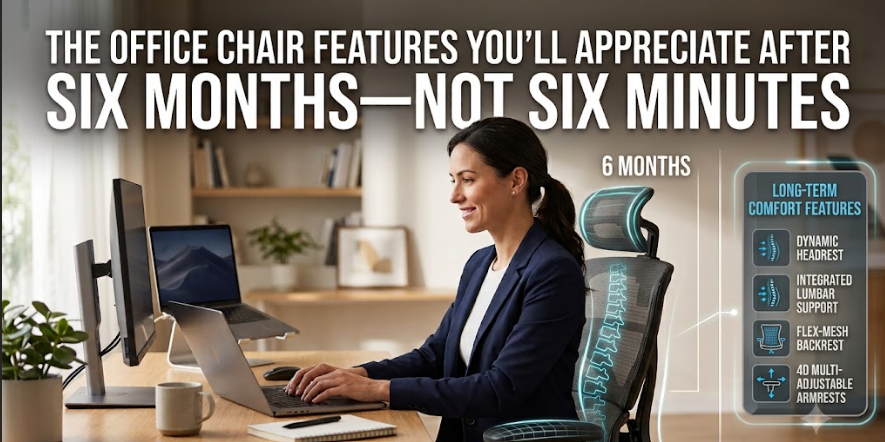
A professional working 8 hours a day spends more than 2,000 hours every year sitting at a desk. Choosing the right office chair features isn’t just about comfort—it’s an investment in productivity, posture, and long-term well-being.
Why Looking Beyond First Impressions Matters
Think about the last time you tested an office chair. Most people adjust the height, lean back once or twice, check whether the seat feels soft, and form an opinion within a few minutes. While that’s completely understandable, it rarely tells the whole story.Ask Yourself Before Buying
- Will this seat remain comfortable after months of daily use?
- Can the chair adapt to different working positions?
- Does it offer reliable lumbar support throughout the day?
- Will the armrests reduce strain on my shoulders and wrists?
- Is the build quality designed for years of regular use?
1. Lumbar Support That Still Supports You After Hundreds of Workdays
When people compare office chairs, they often pay attention to the seat cushioning, colour, or overall design before anything else. Surprisingly, one of the most valuable office chair features usually goes unnoticed during a short showroom visit—lumbar support. Your lower back naturally has a gentle inward curve that helps distribute body weight and keeps your spine aligned. Sitting for long hours without proper support places unnecessary stress on the muscles surrounding your spine. The result isn’t always immediate pain. More often, it begins as subtle stiffness, frequent posture adjustments, or the urge to stand up every 20–30 minutes. This is where a well-designed ergonomic office chair makes a noticeable difference. Instead of forcing your body into one rigid position, proper lumbar support follows the natural curve of your back, helping maintain healthy posture throughout the day.Why It Matters After Six Months
A chair without proper lumbar support may feel comfortable during the first few days. After months of daily use, however, you’ll begin noticing increased fatigue, lower back discomfort, and reduced concentration. Quality lumbar support quietly works every day, making long working hours feel less exhausting.
- Less lower back fatigue after a full workday.
- Fewer posture corrections during meetings.
- Greater comfort while focusing on deep work.
- Reduced pressure on your spine during long sitting sessions.
- Improved overall sitting experience throughout the week.
2. A Seat Cushion That Doesn’t Lose Its Shape
One of the biggest misconceptions people have when buying a chair is believing that softer always means better. While a plush seat may feel luxurious at first, long-term comfort depends far more on material quality than initial softness. Among all office chair features, seat cushioning has one of the greatest impacts on everyday comfort. Since your body weight rests on the seat for several hours each day, poor-quality foam begins showing signs of wear much sooner than many people expect. Over time, low-density foam compresses unevenly, reducing support and creating pressure points around the hips and thighs. Once this happens, even the most stylish chair becomes uncomfortable to use for extended periods. A high-quality comfortable office chair uses high-density moulded foam or premium cushioning materials that retain their shape despite continuous use. Instead of sinking into the seat, your weight is distributed more evenly, reducing fatigue throughout the day.What to Look For
- High-density moulded foam
- Consistent seat firmness
- Wide seating area for better weight distribution
- Durable upholstery that resists sagging
- Comfort during extended sitting—not just the first five minutes
Quick Buying Tip
Before purchasing an office chair, ask about the type of foam used, its density, warranty coverage, and expected lifespan. These details often reveal far more about long-term comfort than appearance alone.
3. Adjustable Armrests That Save More Than Just Your Arms
When buyers compare office chairs, adjustable armrests are often treated as an optional luxury. In reality, they’re among the most practical office chair features for anyone who spends several hours typing, attending virtual meetings, or switching between different tasks throughout the day. Your shoulders, elbows, and wrists work together constantly. If your chair’s armrests are positioned too high, your shoulders remain raised, causing tension that gradually spreads to your neck. If they’re too low, your forearms lose support, forcing your upper body to compensate. Neither position is ideal, especially during long work sessions. A quality adjustable office chair allows the armrests to adapt to your body rather than forcing your body to adapt to the chair. Properly positioned armrests help your elbows stay close to your body at approximately a 90-degree angle, reducing unnecessary strain on your shoulders and improving overall comfort.Benefits of Adjustable Armrests
- Reduce pressure on the shoulders and neck.
- Support the elbows during long typing sessions.
- Promote a healthier sitting posture.
- Improve comfort while using a keyboard and mouse.
- Adapt to different desk heights and workstations.
4. A Backrest That Moves With You Instead of Holding You Still
Many people believe maintaining perfect posture means sitting completely upright all day. In reality, the human body isn’t designed to remain in one position for hours at a time. Small, natural movements help reduce muscle fatigue and improve circulation. That’s why one of the most underrated office chair features is a responsive reclining backrest. A modern ergonomic office chair should allow controlled movement rather than locking you into a single posture. Whether you’re concentrating on detailed work, reading documents, joining a video conference, or taking a short thinking break, your chair should support each activity comfortably. Features such as tilt tension adjustment, recline lock positions, and synchronized movement allow the backrest to follow your body’s natural motion while maintaining proper support. These mechanisms help distribute pressure more evenly across your back instead of concentrating it in one area.Signs of a Well-Designed Recline System
- Smooth reclining motion without sudden jerks.
- Multiple locking positions.
- Adjustable tilt tension based on body weight.
- Stable support while leaning back.
- Consistent lumbar contact during movement.
Quick Tip Before Buying
Test the recline mechanism several times before making a purchase. A good office chair should move naturally with your body, provide consistent support throughout the motion, and lock securely at different angles without feeling unstable.
5. Breathable Materials That Keep You Comfortable Throughout the Year
Comfort isn’t determined by cushioning alone. Temperature also plays a significant role in how comfortable an office chair feels during long working hours. One of the most overlooked office chair features is the material used for the backrest and seat. If you’ve ever finished a long work session with a warm, uncomfortable back, you’ve experienced the impact of poor airflow. Materials that trap heat can quickly make even a well-cushioned chair feel uncomfortable, especially during warmer months. A quality comfortable office chair often uses breathable mesh or premium fabric that allows better air circulation. Instead of trapping body heat, these materials help regulate temperature, making it easier to remain focused throughout the day.Why Breathability Matters
- Improves airflow during extended sitting.
- Reduces heat build-up on the back and shoulders.
- Provides greater comfort in warmer climates.
- Supports long working hours without discomfort.
- Maintains a fresher seating experience throughout the day.
6. Smooth Wheels That Move Without Interrupting Your Workflow
Height adjustment is essential because every workspace is different. An Adjustable office chair allows users to align their seating position with the desk height, while a Comfortable office chair helps reduce unnecessary pressure on the lower back and legs during extended working sessions. Caster wheels rarely influence buying decisions, but they affect your daily experience far more than most people realise. Poor-quality wheels become noisy, difficult to roll, and may even damage certain floor surfaces over time. Premium office chairs are equipped with durable casters designed to glide smoothly across tiles, wooden flooring, laminate, or carpet. Instead of dragging your chair every time you need to reach another part of your desk, quality wheels make movement effortless. When evaluating office chair features, don’t forget to inspect the wheels. Quiet movement, durable materials, and reliable stability all contribute to a better overall experience.Look For
- Noise-free rolling.
- Scratch-resistant wheel material.
- Stable movement on multiple floor types.
- Durable construction for daily use.
7. A Reliable Hydraulic Lift That Performs Every Day
The ability to adjust seat height is one of the most basic yet essential office chair features. Unfortunately, it’s also one of the first components to fail in lower-quality chairs. A reliable hydraulic lift allows users to position themselves correctly in relation to their desk. Your feet should rest comfortably on the floor while your knees remain close to a 90-degree angle. This simple adjustment improves posture and reduces unnecessary pressure on your lower back. Poor-quality gas lifts often begin sinking unexpectedly after months of use. Although this may seem like a minor inconvenience, constantly readjusting your chair interrupts your workflow and negatively affects comfort.Signs of a High-Quality Hydraulic Lift
- Smooth height adjustment.
- No gradual sinking while seated.
- Stable support for different body weights.
- Reliable performance for years of everyday use.
8. Build Quality That You Stop Thinking About
One of the best compliments an office chair can receive is that you forget it’s there. That might sound unusual, but it’s true. The finest office chair features work quietly in the background. There are no squeaks, no loose armrests, no unstable base, and no constant adjustments. The chair simply supports your workday without demanding attention. Strong frames, premium materials, precision engineering, and quality finishing all contribute to long-term durability. While these details may not stand out in a product photo, they become obvious after months of daily use.9. Warranty and After-Sales Support You Can Count On
Even the highest-quality office furniture requires occasional maintenance. That’s why after-sales service deserves a place among the most important office chair features. A comprehensive warranty demonstrates that the manufacturer stands behind its product. It also provides peace of mind should components such as wheels, hydraulic lifts, or adjustment mechanisms require replacement. Before making a purchase, take a few minutes to understand what the warranty covers, whether spare parts are available, and how service requests are handled. These practical considerations often make ownership much easier over the years.Questions Worth Asking Before Buying
- What is the warranty period?
- Are replacement parts readily available?
- Does the brand offer installation support?
- Is repair service available after the warranty ends?
- How responsive is customer support?
Final Thoughts
A stylish office chair might catch your attention today, but the right office chair features will continue supporting your comfort, posture, and productivity for years to come. Instead of choosing a chair based solely on appearance or price, consider how it will perform after hundreds of working days.
Features like adjustable lumbar support, durable cushioning, ergonomic armrests, breathable materials, smooth mobility, and dependable build quality aren’t just specifications on a product page—they shape your everyday work experience.
Whether you’re furnishing a home office, upgrading a corporate workspace, or selecting seating for an entire team, taking the time to evaluate these nine essential office chair features will help you make a smarter long-term investment. At OffheMan, we believe an office chair should do more than look professional. It should deliver lasting comfort, support healthier posture, and help you stay productive throughout every stage of your workday. Choosing the right chair today is an investment you’ll continue to appreciate long after the first six minutes—and well beyond the first six months.
 No products in the cart.